

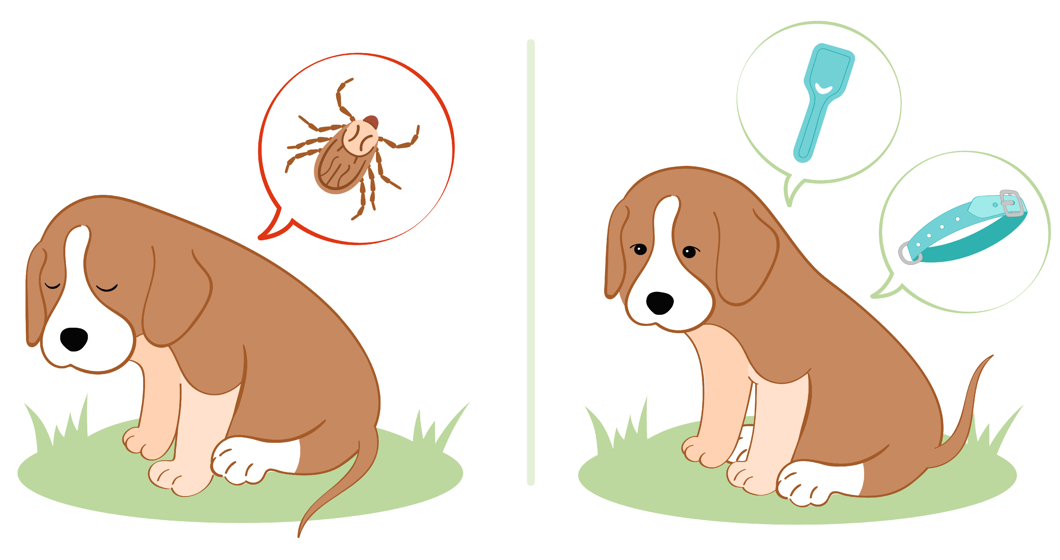
Ick. Ticks are easily some of the creepiest critters out there. These tiny parasites may be small, but they can pose a big risk to both dogs and humans. If you spend time outdoors with your pup, whether it’s a hike through the woods, a walk through the neighborhood, or playtime in the backyard, ticks are something every dog owner should understand. Knowing what ticks are, how they affect dogs, and how to prevent them can go a long way toward protecting your furry friend.
What Is a Tick?
Ticks are arachnids, which means they are related to spiders and mites. Ticks survive by feeding on the blood of animals and humans, which is why they are considered external parasites. Ticks don’t jump or fly. Instead, they climb onto grasses, shrubs, or brush and wait for a host to pass by. When a dog brushes against the vegetation, the tick grabs on and begins searching for a place to attach and feed.
Once attached, a tick inserts its mouthparts into the skin and begins feeding on blood. If left undisturbed, some ticks can remain attached to a host for several days, sometimes up to a week or longer, gradually swelling as they feed. During this time, they may transmit harmful bacteria or pathogens that can lead to disease.
Common Types of Ticks in the United States
Several species of ticks are commonly found across the United States, and each carries different risks for dogs.
American Dog Tick
Also known as the wood tick, this species is commonly found in grassy areas, fields, and trails throughout the eastern and central United States. American dog ticks can transmit diseases such as Rocky Mountain spotted fever.
Blacklegged Tick (Deer Tick)
The blacklegged tick is especially well known because it carries the bacteria responsible for Lyme disease in dogs. These ticks are common in the Northeast, Midwest, and parts of the West Coast. They tend to live in wooded areas with tall grass and leaf litter.
Ticks can transmit Lyme disease in dogs after first becoming infected themselves from feeding on infected wildlife, most often small animals like mice or birds. Once infected, the tick can pass the bacteria to a dog during a later feeding. In most cases, the tick must be attached for about 24–48 hours before transmission occurs. Dogs with Lyme disease may develop symptoms such as fever, lethargy, loss of appetite, swollen lymph nodes, and joint pain that can cause shifting lameness. Veterinarians typically diagnose the illness using a blood test, and it is most commonly treated with a several-week course of antibiotics. Most dogs recover well when the disease is caught early, but some may need extended treatment.
Lone Star Tick
Recognizable by the white dot on the back of the female, lone star ticks are common in the southeastern and eastern parts of the country but have been spreading northward in recent years. They are associated with diseases such as ehrlichiosis and can also cause a condition called Southern Tick-Associated Rash Illness (STARI).
Brown Dog Tick
Unlike many other species, brown dog ticks can survive indoors and often infest homes, kennels, or dog facilities. They are found throughout the United States and can transmit diseases such as canine ehrlichiosis and babesiosis.
How Do Dogs Get Ticks?
Dogs typically pick up ticks when they brush against vegetation where ticks are waiting for a host. This can happen in places like:
Wooded hiking trails
Tall grass or brush
Leaf piles or wooded backyards
Parks and dog-friendly outdoor areas
Even neighborhood yards with overgrown landscaping
Ticks are most active during warmer months, generally from spring through fall. However, they don’t necessarily disappear in winter. In many regions, ticks simply become less active or go dormant during cold weather. If temperatures rise above freezing, ticks can become active again, even in the middle of winter.
What Does It Look Like When a Dog Has a Tick?
Ticks can be surprisingly small; some are no larger than a sesame seed before feeding. After feeding, they swell and become easier to see.
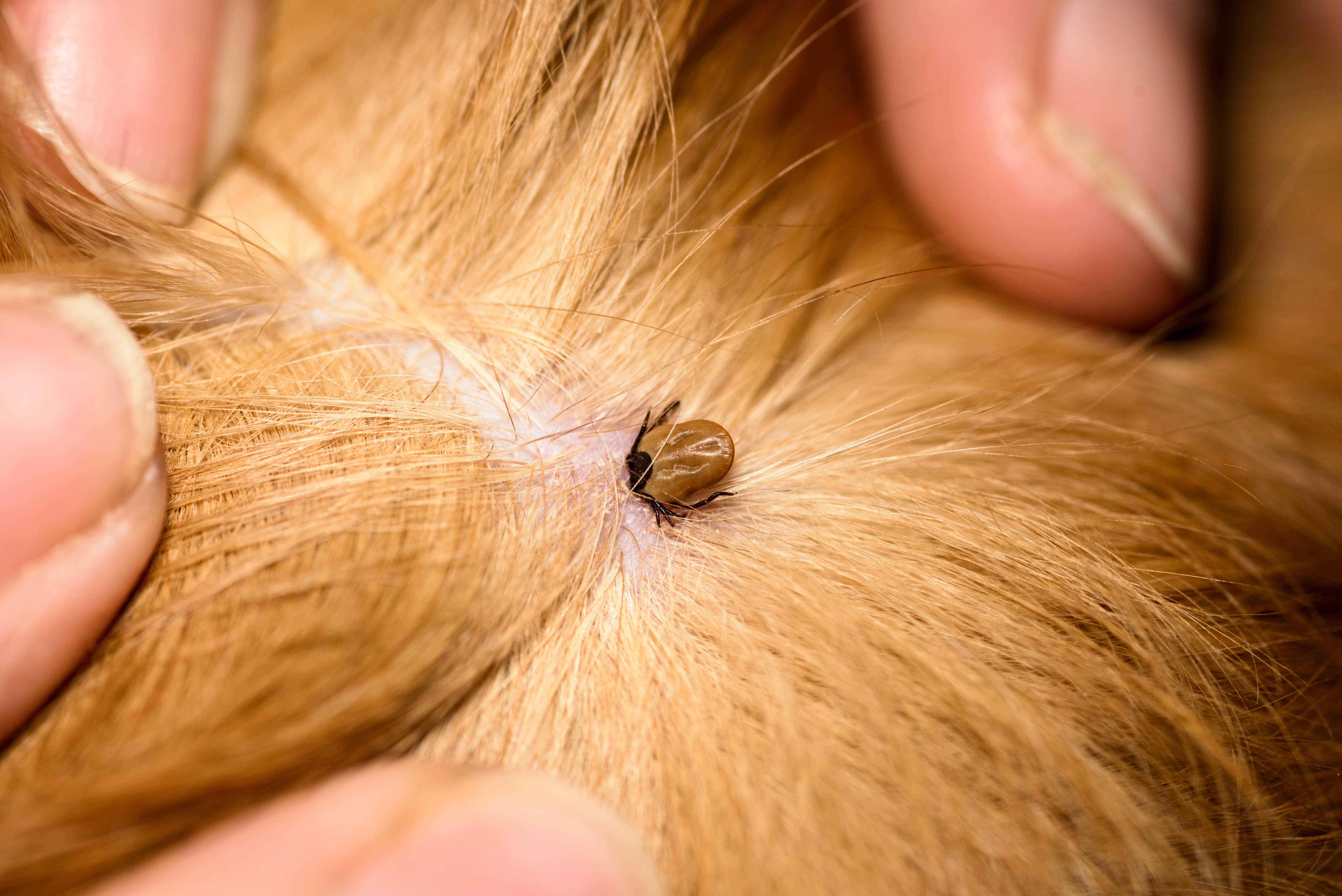
If your dog has a tick, you may notice:
A small bump or dark spot on the skin
A tick attached that is slowly enlarging as it feeds
Redness or irritation around the bite site
Ticks often attach in areas where dogs have thin skin or less fur, including:
Around the ears and ear folds
Under the collar
Between the toes
Around the eyes or eyelids
Under the tail
In the armpits or groin area
Some dogs show symptoms after a tick bite, especially if disease transmission occurs. Possible dog tick symptoms include lethargy, fever, swollen joints, loss of appetite, or lameness. If your dog shows any unusual symptoms after a tick bite, it’s important to contact your veterinarian.
How to Remove Ticks From Dogs
If you find a tick on your dog, removing it quickly and properly is important. The longer a tick remains attached, the greater the chance it may transmit disease. In many cases, disease transmission does not occur immediately. For example, ticks carrying Lyme disease generally need to remain attached for about 24–48 hours before the bacteria can be transmitted.
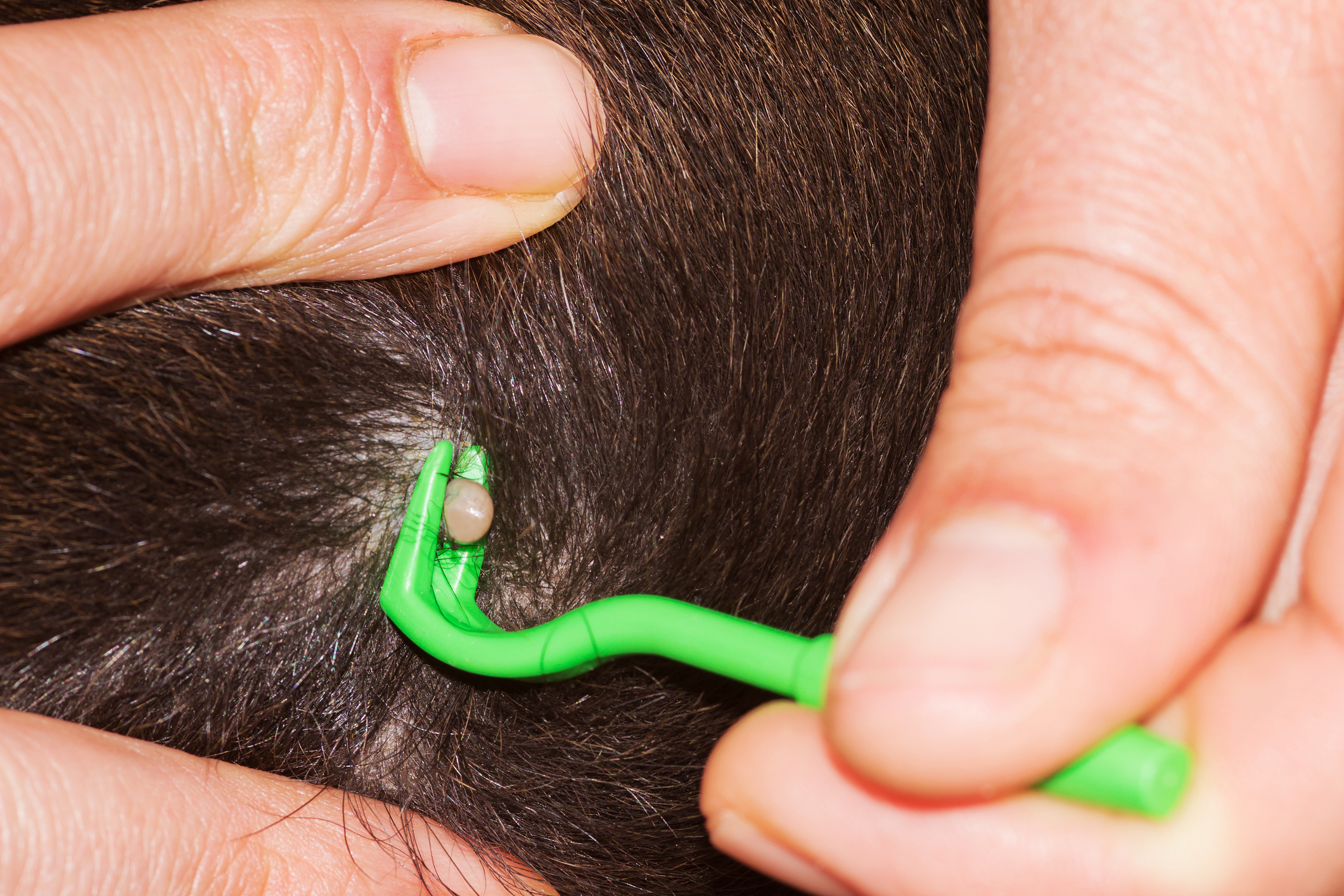
To remove a tick:
Use fine-tipped tweezers or a tick-removal tool.
Grasp the tick as close to the skin as possible.
Pull upward slowly and steadily without twisting.
Clean the bite area and your hands with soap and water or an antiseptic.
Dispose of the tick by sealing it in a bag, submerging it in rubbing alcohol, or flushing it down the toilet. (Do not crush it with your fingers.)
Avoid squeezing the tick’s body or using home remedies like petroleum jelly or heat, as these can cause the tick to release more saliva into the bite.
After removal, it’s a good idea to monitor the bite site and your dog’s behavior for any unusual symptoms. If you notice swelling, redness, or signs of illness, contact your veterinarian for guidance. Keep note of the bite site and date of removal in case you need to relay this information to your vet.
Tick Bites on Humans
Ticks don’t just affect dogs; humans can be bitten, too. While dogs cannot directly transmit tick-borne diseases to people, a tick can hitch a ride on your dog’s fur and later attach to a human. This is why it’s important to check both yourself and your dog for ticks after spending time outdoors, especially in grassy or wooded areas.
How to Prevent Ticks on Dogs
Prevention is one of the best ways to protect your dog from ticks. Many pet owners rely on veterinarian-recommended products such as:
Tick collars for dogs
Topical tick prevention treatments
Oral tick medications
Your veterinarian can recommend the best option for your dog based on your dog’s age, weight, location, and lifestyle.
Some homeowners also treat their yards to reduce tick populations. Professional tick control services can target areas where ticks thrive.
For example, services like Mosquito Squad Plus focus on reducing ticks at their source—their breeding grounds. During treatment, technicians target areas in the yard where ticks hide and reproduce, including shaded spaces, tall grass, and brush. For additional protection, treatments may also be applied along the perimeter of the property where ticks often live in shrubbery or overgrown vegetation. Many services recommend recurring treatments approximately every 21 days after the initial visit to maintain protection throughout tick season.
Creating a Dog-Friendly Yard
Ticks thrive in overgrown grass, brush, and wooded areas, so maintaining your yard is an important part of prevention. Keeping grass trimmed, landscaping maintained, and debris cleared can help reduce the places ticks like to hide. If possible, limit your dog’s access to dense brush or wooded areas, and consider keeping them within a fenced yard or on a leash during walks. And no matter where you go, always check your dog (and yourself) for ticks afterward.
Maintaining a clean outdoor environment also includes keeping your yard free of pet waste. Dog waste can attract pests and make outdoor spaces less enjoyable for everyone. That’s where DoodyCalls comes in. Professional poop pickup services help keep your yard cleaner and ready for more tail-wagging adventures. When it comes to your dog’s health, a little prevention and routine yard care can make a big difference in keeping ticks and other unwanted pests away.
Sources: American Kennel Association, Wild Life Informer, Mosquito Squad Plus