

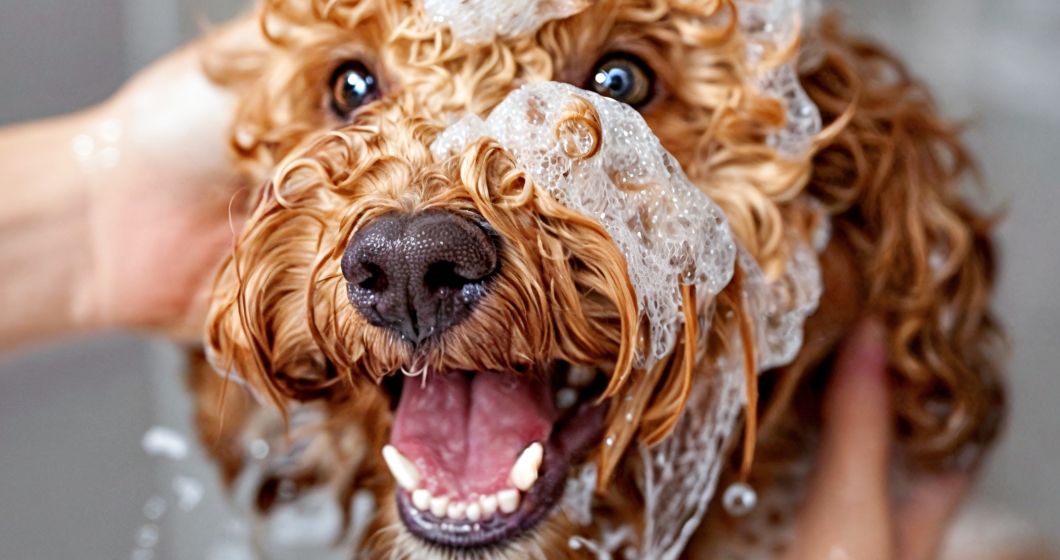
Keeping your dog clean is an important part of their overall health, but if you’ve ever wondered how often your pup really needs a bath, you’re not alone. Bathe too often and you can dry out their skin; bathe too little and things can get… well, a little stinky. Let’s break down general bathing guidelines, identify factors that change the schedule, and offer tips to make bath time easier for both you and your dog.
How Often Should You Bathe a Dog?
For most dogs, bathing about once every 4–6 weeks is a good general guideline. This helps remove dirt, allergens, and odors without stripping away the natural oils that keep your dog’s skin and coat healthy.
That said, bathing is just one part of your dog’s hygiene routine. Most dogs need grooming, such as brushing or deshedding, nail trims, and ear cleaning, far more often than they need a full bath. Regular grooming keeps your dog comfortable, reduces shedding, and can help prevent skin and coat issues, often allowing you to go longer between baths.
What Affects How Often Your Dog Needs a Bath?
Breed & Coat Type
Different coats have different needs:
Short-haired breeds (like Boxers, Beagles, or Labs) tend to have coats that don’t trap much dirt or odor. These dogs usually need fewer baths around every 6-8 weeks and benefit most from regular brushing to remove loose hair and distribute natural oils.
Long-haired and double-coated breeds (like Golden Retrievers, German Shepherds, or Huskies) are more likely to collect dirt, debris, and moisture in their fur. While they don’t typically need frequent baths (every 4-8 weeks should be fine), they do need consistent brushing or deshedding to prevent matting, manage shedding, and keep their coats healthy.
Curly, wiry, or hypoallergenic coats (like Poodles, Doodles, or Schnauzers) can trap dirt close to the skin and are prone to tangles and mats. These dogs often benefit from more regular bathing and professional grooming to keep their coats clean, comfortable, and manageable.
Coat type matters because it determines how much dirt, oil, and debris your dog’s fur holds onto.
Activity Level
Is your dog a couch cuddler or a mud-loving adventurer?
Dogs that spend lots of time outdoors, swimming, hiking, or rolling in questionable smells may need more frequent baths.
Less active dogs who stay mostly indoors can usually go longer between washes.
More activity = more dirt, bacteria, and odors.
Age
Puppies have sensitive skin and generally don’t need frequent baths unless they get into something messy.
Senior dogs may benefit from gentle, less frequent baths to prevent skin irritation, especially if mobility issues make bathing stressful.
Age affects skin sensitivity and tolerance for handling during bath time.
Seasonality
The time of year can also affect how often your dog needs a bath. During warmer months, dogs tend to spend more time outdoors, swim more, and pick up pollen and dirt, which may mean more frequent baths. In colder months, bathing can usually be less frequent since over-bathing combined with dry winter air can irritate your dog’s skin. Year-round, regular brushing and grooming help manage seasonal shedding and keep your dog clean between baths.
Health Conditions
Dogs with skin allergies, infections, or other medical conditions may need special bathing schedules or medicated shampoos prescribed by a veterinarian. Always follow your vet’s guidance if your dog has ongoing skin issues.
How Often Should You Bathe a Dog With Fleas?
If your dog has fleas, bathing can help (including the use of a flea comb), but it’s not a complete solution on its own. A flea-specific shampoo can kill fleas on contact, providing immediate relief. However, flea infestations usually require additional treatments, such as topical preventatives, oral medications, and environmental control.
Be careful not to over-bathe, as frequent washing can irritate your dog’s skin. Always consult your vet for a full flea treatment plan.
How to Wash Your Dog: Basic Bathing Instructions
What Can I Wash My Dog With?
Always use a dog-specific shampoo. Human shampoos, even gentle ones, can disrupt your dog’s skin pH and cause dryness or irritation.
Step-by-Step Dog Bath Basics
Brush your dog first to remove loose fur and tangles.
Use lukewarm water to thoroughly wet the coat.
Apply dog shampoo and gently massage it into the fur.
Rinse thoroughly, as leftover soap can cause itching.
Towel dry or use a low-heat dryer if your dog tolerates it.
How to Wash a Dog’s Face
Use a damp washcloth with a small amount of dog-safe shampoo or just water. Avoid getting soap in the eyes, ears, and nose. Gentle is the name of the game here.
Extra Bath-Time Tips
How to Give a Dog a Bath Without Water
No-rinse shampoos, grooming wipes, and dry foams are great for quick cleanups, senior dogs, or pups who strongly dislike water.
How to Give a Dog a Bath Outside
Outdoor baths can be a great option in warm weather. Use a hose with gentle pressure, dog-safe shampoo, and make sure your dog doesn’t get chilled afterward.
Do You Bathe a Dog Before Grooming?
Yes, most groomers prefer dogs to arrive clean or freshly bathed, if that is not included in your grooming package. Clean fur is easier to cut, brush, and style, and it helps prevent mats and uneven trimming.
Keeping Your Dog Clean Continues Beyond the Bath
Bathing plays a big role in keeping your dog healthy, but it’s only part of the picture. A clean dog also needs a clean outdoor environment. Dog poop left in the yard can harbor harmful bacteria and parasites that your pup can track back inside or come into contact with.
That’s where DoodyCalls dog poop removal services come in. By keeping your yard clean and free of pet waste, you help create a safer, healthier space for your dog.
A clean yard + a clean dog = a happier, healthier home.