

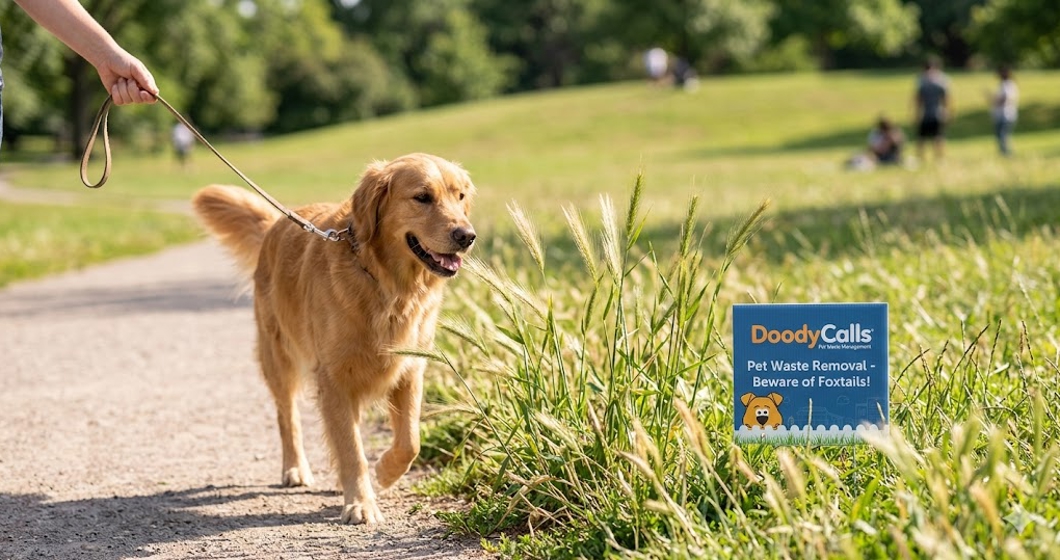
A summer safety guide for dog owners in the Tri-Valley, Tracy & Mountain House
It's that golden time of year when the hills around Livermore, Pleasanton, and Tracy turn a gorgeous shade of amber — which is beautiful for Instagram and genuinely dangerous for your dog. Those dry, feathery grasses hiding in the fields? They're foxtails, and they are sneaky, painful, and surprisingly serious.
If you've ever pulled a tiny barbed seed from between your dog's toes, you already know the drill. But foxtails don't just poke — they burrow. And once they start moving inward, they don't stop.
What Even Is a Foxtail?
Foxtails are the seed heads of wild barley and similar grasses. They're named for their bushy, fox-tail shape when they're green in spring — but by summer, they dry out, break apart, and become tiny little arrows with one job: find a warm body and travel inward. The barbed shape means they can only move in one direction: deeper.
They're absolutely everywhere in our area from June through September. Think the trails at Del Valle Regional Park, the open fields along the Iron Horse Trail in Dublin and Pleasanton, the brushy hillsides of Brushy Peak Regional Preserve in Livermore, the open pastures near Tracy and Mountain House, and basically any dry, grassy area your pup loves to explore.
Where Foxtails Like to Hide (On Your Dog)
The five most common entry points:
Paw pads and between the toes — they love the soft skin there
Ears — dogs who shake their heads repeatedly may have one working its way down the ear canal
Nostrils — sudden violent sneezing fits are a red flag
Eyes — you'll often see discharge, squinting, or pawing at the eye
Groin and armpits — especially on long-coated or fluffy dogs
A foxtail in the ear can reach the eardrum. One in the nose can migrate into the sinuses or lungs. One between the toes can travel into the body cavity. This is not drama — it's just how their awful little barbs work.
Signs Your Dog May Have a Foxtail
Intense, localized licking or chewing (especially paws)
Head shaking or tilting; pawing at ears
Sudden repeated sneezing — sometimes with bloody discharge
Squinting, tearing, or rubbing one eye
A small lump or abscess forming anywhere on the body
Limping with no obvious wound visible
If you see any of these, especially after a walk through dry grass, get to your vet sooner rather than later. The longer a foxtail sits, the harder (and more expensive) it is to remove.
How to Protect Your Pup This Summer
You don't have to skip every trail — you just have to be strategic:
Do a full body check after every outdoor adventure. Run your fingers through their coat, check between every toe, look in and around both ears.
Keep the hair between their toes trimmed short. Long-coated dogs are a foxtail magnet.
Consider a foxtail-proof field guard or protective vest for dogs who love off-trail romping.
Stick to maintained paths during peak foxtail season (June–September) and avoid tall dry grass.
Walk during early morning when grasses are slightly damp and less dispersed.
Local Resources
— The DoodyCalls Tri-Valley Team
Ready for a cleaner yard this summer? Book your DoodyCalls service today!